أهمية ضبط النفس في بناء الشخصية الأخلاقية دراسة موضوعية في ضوء الآيات القرآنية وأقوال المفسرين
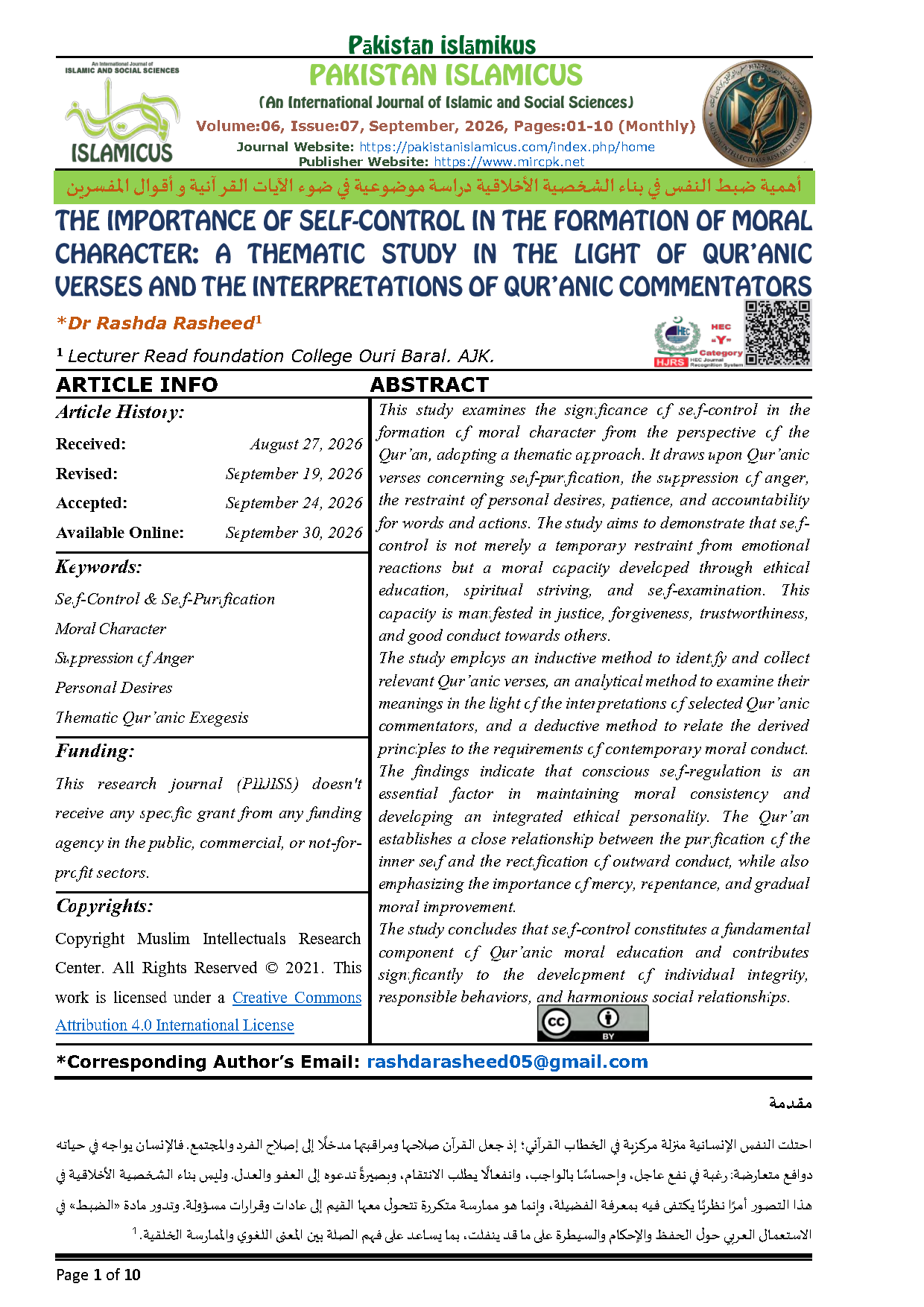
THE IMPORTANCE OF SELF-CONTROL IN THE FORMATION OF MORAL CHARACTER: A THEMATIC STUDY IN THE LIGHT OF QUR’ANIC VERSES AND THE INTERPRETATIONS OF QUR’ANIC COMMENTATORS
Keywords:
Self-Control & Self-Purification, Moral Character, Suppression of Anger, Personal Desires, Thematic Qur’anic ExegesisAbstract
This study examines the significance of self-control in the formation of moral character from the perspective of the Qur’an, adopting a thematic approach. It draws upon Qur’anic verses concerning self-purification, the suppression of anger, the restraint of personal desires, patience, and accountability for words and actions. The study aims to demonstrate that self-control is not merely a temporary restraint from emotional reactions but a moral capacity developed through ethical education, spiritual striving, and self-examination. This capacity is manifested in justice, forgiveness, trustworthiness, and good conduct towards others.
The study employs an inductive method to identify and collect relevant Qur’anic verses, an analytical method to examine their meanings in the light of the interpretations of selected Qur’anic commentators, and a deductive method to relate the derived principles to the requirements of contemporary moral conduct. The findings indicate that conscious self-regulation is an essential factor in maintaining moral consistency and developing an integrated ethical personality. The Qur’an establishes a close relationship between the purification of the inner self and the rectification of outward conduct, while also emphasizing the importance of mercy, repentance, and gradual moral improvement.
The study concludes that self-control constitutes a fundamental component of Qur’anic moral education and contributes significantly to the development of individual integrity, responsible behaviors, and harmonious social relationships.
Downloads
References
Yunzaru: Ibn Manzur, Lisan al-‘Arab, maddah: “Dabt”.
Yunzaru: Al-Raghib al-Asfahani, Al-Mufradat fi Gharib al-Qur’an, maddah: “Nafs”.
Al-Qur’an al-Karim, Surah al-Shams, Ayah 9, p. 595.
Yunzaru: Al-Raghib al-Asfahani, Al-Mufradat fi Gharib al-Qur’an, maddatayn: “Zaka” wa “Nafs”.
Yunzaru: Al-Ghazali, Ihya’ ‘Ulum al-Din, Kitab Riyadat al-Nafs wa Tahdhib al-Akhlaq wa Mu‘alajat Amrad al-Qalb.
Al-Qur’an al-Karim, Surah al-Shams, Ayat 9–10, p. 595.
Yunzaru: Al-Tabari, Jami‘ al-Bayan, Tafsir Surah al-Shams, Ayat 9–10.
Al-Qur’an al-Karim, Surah al-Nazi‘at, Ayat 40–41, p. 584.
Yunzaru: Ibn Kathir, Tafsir al-Qur’an al-‘Azim, Tafsir Surah al-Nazi‘at, Ayat 40–41.
Al-Qur’an al-Karim, Surah Yusuf, Ayah 53, p. 242.
Al-Qur’an al-Karim, Surah al-Hashr, Ayah 18, p. 548.
Yunzaru: Ibn al-Qayyim, Madarij al-Salikin, Manzilat al-Muhasabah.
Al-Qur’an al-Karim, Surah Ghafir, Ayah 19, p. 469.
Yunzaru: Al-Razi, Mafatih al-Ghayb, Tafsir Surah al-Hashr, Ayah 18.
Al-Qur’an al-Karim, Surah Al ‘Imran, Ayah 134, p. 67.
Yunzaru: Al-Sa‘di, Taysir al-Karim al-Rahman, Tafsir Surah Al ‘Imran, Ayah 134, Vol. 2, p. 243.
Yunzaru: Ibn Rajab, Jami‘ al-‘Ulum wa al-Hikam, Sharh al-Hadith al-Sadis ‘Ashar: “La Taghdab”.
Al-Qur’an al-Karim, Surah Fussilat, Ayah 34, p. 480.
Al-Qur’an al-Karim, Surah Fussilat, Ayah 35, p. 480.
Yunzaru: Al-Baghawi, Ma‘alim al-Tanzil, Tafsir Surah Fussilat, Ayat 34–35.
Al-Qur’an al-Karim, Surah al-Shura, Ayah 40, p. 487.
Yunzaru: Ibn ‘Ashur, Al-Tahrir wa al-Tanwir, Tafsir Surah Fussilat, Ayat 34–35.
Al-Qur’an al-Karim, Surah al-Isra’, Ayah 53, p. 287.
Al-Qur’an al-Karim, Surah al-Hujurat, Ayah 12, p. 517.
Yunzaru: Al-Qurtubi, Al-Jami‘ li-Ahkam al-Qur’an, Tafsir Surah al-Hujurat, Ayah 12.
Al-Qur’an al-Karim, Surah al-Nisa’, Ayah 135, p. 100.
Yunzaru: Abu Hayyan, Al-Bahr al-Muhit, Tafsir Surah al-Nisa’, Ayah 135.
Al-Qur’an al-Karim, Surah al-Nur, Ayat 30–31, p. 353.
Al-Qur’an al-Karim, Surah al-Furqan, Ayah 43, p. 363.
Yunzaru: Al-Tabari, Jami‘ al-Bayan, Tafsir Surah al-Nazi‘at, Ayah 40.
Yunzaru: Al-Ghazali, Ihya’ ‘Ulum al-Din, Kitab Riyadat al-Nafs wa Tahdhib al-Akhlaq.
Al-Qur’an al-Karim, Surah al-Baqarah, Ayah 153, p. 23.
Al-Qur’an al-Karim, Surah Al ‘Imran, Ayah 200, p. 76.
Yunzaru: Al-Shawkani, Fath al-Qadir, Tafsir Surah Al ‘Imran, Ayah 200. [Vol./p.: To be completed according to the edition consulted].
Al-Qur’an al-Karim, Surah al-Hadid, Ayah 23, p. 540.
Yunzaru: Ibn al-Qayyim, Madarij al-Salikin, Manzilat al-Sabr wa Manzilat al-Muhasabah.
Al-Qur’an al-Karim, Surah al-Nahl, Ayah 90, p. 277.
Al-Qur’an al-Karim, Surah al-Nisa’, Ayah 58, p. 87.
Yunzaru: Al-Alusi, Ruh al-Ma‘ani, Tafsir Surah al-Nisa’, Ayah 58. [Vol./p.: To be completed according to the edition consulted].
Al-Qur’an al-Karim, Surah al-Mutaffifin, Ayat 1–3, p. 587.
Yunzaru: Ibn Hazm, Al-Akhlaq wa al-Siyar fi Mudawat al-Nufus, Mabahith Tahdhib al-Nafs wa ‘Uyunibiha.
Al-Qur’an al-Karim, Surah al-‘Ankabut, Ayah 45, p. 401.
Yunzaru: Ibn Kathir, Tafsir al-Qur’an al-‘Azim, Tafsir Surah al-‘Ankabut, Ayah 45.
Al-Qur’an al-Karim, Surah al-Baqarah, Ayah 183, p. 28.
Yunzaru: Al-Sa‘di, Taysir al-Karim al-Rahman, Tafsir Surah al-Baqarah, Ayah 183. [Vol./p.: To be completed according to the edition consulted].
Al-Qur’an al-Karim, Surah al-Tahrim, Ayah 6, p. 560.
Yunzaru: Al-Qurtubi, Al-Jami‘ li-Ahkam al-Qur’an, Tafsir Surah al-Tahrim, Ayah 6.
Al-Qur’an al-Karim, Surah Luqman, Ayat 18–19, p. 412.
Yunzaru: Al-Baghawi, Ma‘alim al-Tanzil, Tafsir Surah Luqman, Ayat 18–19.
Al-Qur’an al-Karim, Surah al-Hujurat, Ayah 6, p. 516.
Yunzaru: Ibn ‘Ashur, Al-Tahrir wa al-Tanwir, Tafsir Surah al-Hujurat, Ayah 6. [Vol./p.: To be completed according to the edition consulted].
Al-Qur’an al-Karim, Surah al-Isra’, Ayah 36, p. 285.
Yunzaru: Al-Razi, Mafatih al-Ghayb, Tafsir Surah al-Isra’, Ayah 36.
Al-Qur’an al-Karim, Surah al-Hujurat, Ayah 11, p. 516.
Yunzaru: Ibn Manzur, Lisan al-‘Arab, Maddah: “Dabt”.
Yunzaru: Ibn Rajab, Jami‘ al-‘Ulum wa al-Hikam, Sharh al-Hadith al-Sadis ‘Ashar: “La Taghdab”.
Yunzaru: Al-Shawkani, Fath al-Qadir, Tafsir Surah al-Baqarah, Ayah 153; wa Surah Al ‘Imran, Ayah 200.
Al-Qur’an al-Karim, Surah al-Nisa’, Ayah 135, p. 100.
Yunzaru: Abu Hayyan, Al-Bahr al-Muhit, Tafsir Surah al-Nisa’, Ayah 135.
Downloads
Published
Issue
Section
License
Copyright (c) 2026 PAKISTAN ISLAMICUS (An International Journal of Islamic & Social Sciences)

This work is licensed under a Creative Commons Attribution 4.0 International License.
This work is licensed under a Creative Commons Attribution 4.0 International License.